
This cuisine is still evolving today, and it is up to us what remains of it – Transylvanian flavors at the Skanzen
If we wanted to describe the Transylvanian cuisine in a single word, we would have a difficult task, as for centuries many peoples have lived side by side in Transylvania, constantly influencing one another. Hungarians influenced Saxons, Székelys influenced Romanians, Armenians and Roma influenced Jewish cuisine, and vice versa. Those who wish to explore the diversity of the Transylvanian gastronomy in greater depth will have an excellent opportunity to do so between March 27 and 29 at the Transylvanian region of the Open-Air Ethnographic Museum in Szentendre.
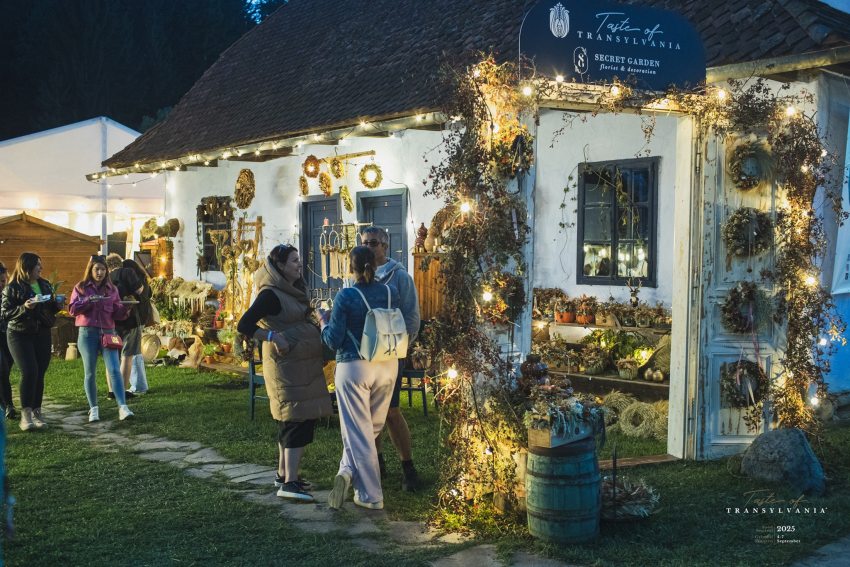
The Transylvanian exhibition area was inaugurated in 2022 at the Szentendre Open-Air Ethnographic Museum — better known as the Skanzen — and it quickly became a huge success among visitors interested in ethnography. The new attraction drew more than one hundred thousand visitors in the first months alone.
The museum management continuously seeks to highlight the regional unit with new attractions. They have already organized Armenian Days, held church services, transformed the café into a replica of the legendary Pilvax for the national holiday, and this weekend Transylvanian gastronomy will take center stage.
The Taste of Transylvania festival has been held in Transylvania for years. Miklós Cseri, the director general of the museum, first noticed the event when he was teaching in Kolozsvár (Cluj-Napoca) and had to visit Székelyudvarhely (Odorheiu Secuiesc). There, Adorján Trucza, owner of the Páva restaurant (and the festival’s main organizer), told him about it. He also invited Cseri and his colleagues to the 2025 autumn event in Borospatak (Valea Boroș). The Hungarian professionals immediately fell in love with the festival, and soon agreed that the next Taste of Transylvania would be hosted by the Skanzen.
A melting pot of peoples
Transylvanian gastronomy has been shaped by different influences than the Pannonian cuisine, says Adorján Trucza, the festival’s main organizer. The many nations living in Transylvania have continuously influenced each other economically and culturally, and naturally this extends to gastronomy as well.
This will be best exemplified by Grandma Róza from Máréfalva, who will prepare a traditional cottage cheese pastry. The dish perfectly demonstrates how recipes migrate between cultures. “This dish was originally made by the Saxons and called hanklich. The Romanians adopted it under the name lichiu. The Székelys call it lepény, and they have been making it for 150–200 years. It’s fascinating how the recipe varies — almost every valley and village prepares it differently,” explained Trucza.
Speaking about the evolution of dishes, he added that in Transylvania there are foods that are prepared differently even at opposite ends of the same village — because Transylvanian cuisine is still alive and evolving. Enthusiasts collect recipes and observe changes, while also laying the foundations of a 21st-century Transylvanian culinary culture that speaks to modern audiences. “The shortage economy is fortunately a thing of the past, so in the 21st century we must offer content created with the most modern technologies,” Trucza noted.
The meeting of tradition and modernity
„Modernization and globalization — spreading from West to East — are also visible in Transylvania, as seen in fast-food chains and frozen foods”, noted Miklós Cseri. Societies that remain more rural, like parts of Transylvania, preserve traditions, ingredients and old recipes more strongly. This is important because there must be a social demand for them — especially as urbanization is also accelerating in the region.
Hundreds of thousands of Romanian citizens — including many Hungarians — work in Germany, Spain, or Italy, where they naturally absorb local culinary cultures. “At the same time, changes in the structure of the economy are transforming traditional animal husbandry and agriculture, which means the disappearance of locally sourced ingredients that once formed the basis of Transylvanian dishes,” the director general pointed out.
At the same time, Transylvanian cuisine has reached the highest levels of refinement. One example is István Veres, who earned a Michelin star for the Babel restaurant and now works in Kézdivásárhely (Târgu Secuiesc). The Páva restaurant in Székelyudvarhely (Odorheiu Secuiesc) also quickly won over audiences when it appeared at the Budapest Gourmet Festival.
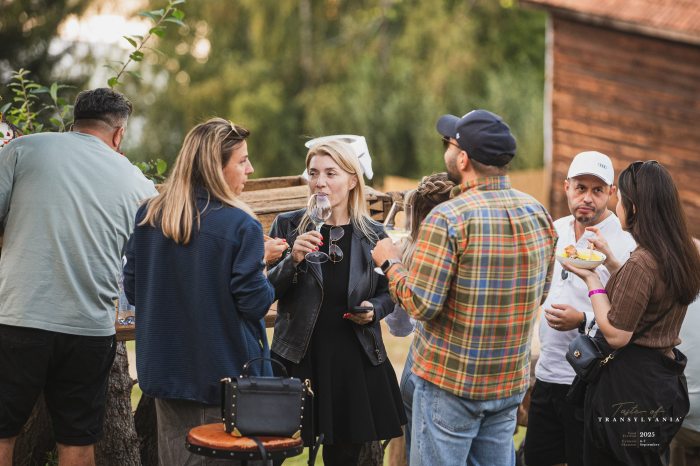
Thus, opposing trends can be observed in Transylvania, which makes initiatives like Taste of Transylvania particularly important. The festival seeks out authentic figures who still possess centuries-old knowledge, while also creating opportunities for them to meet chefs and restaurants representing the most modern techniques and trends. At the “Joy Kitchen,” professionals and tradition-preserving amateurs will cook together and learn from each other.
Trucza also highlighted another interesting aspect: Transylvanian cuisine can easily adapt to modern trends such as meat-free diets, as many dishes contain no animal products. “We use a wide range of herbs that can elevate even a purely vegetable-based dish to a completely new level,” he emphasized.
Vinete, zakuszka, chimney cake: ambassadors of Transylvanian cuisine
Seventy years of a shortage economy cannot be undone overnight, but with persistent effort and education, it is possible to create demand for Transylvanian dishes comparable to that in Western countries, where well-functioning local markets meet consumer needs.
Currently in Transylvania, foreign cuisines often generate more interest than local ones, precisely because Transylvanian cuisine is still alive and traditional dishes are regularly prepared at home. Young people therefore tend not to choose these dishes when dining out. “Transylvanian cuisine is not yet ‘sexy’ enough in Transylvania — but if we neglect it, in twenty years there will be nothing left,” warned Trucza.
However, as Cseri added, there are also “trendy” dishes within Transylvanian cuisine that remain popular. These include vinete (roasted eggplant spread), mici (a Balkan-origin grilled meat dish), puliszka (similar to polenta), zakuszka, and kürtőskalács (chimney cake), which can even be considered a symbol of Transylvania.
From Franciscan recipes to Bagossy Brothers
The festival program always adapts to the location, and the organizers aim to make the most of the given setting. According to Trucza, hosting the festival in the Transylvanian section of the Skanzen is not only an honor but also an ideal venue. They are preparing to create the largest Transylvanian-themed event in Hungary in 2026, enriched with cultural programs beyond gastronomy.
There will be major concerts featuring bands such as Bagossy Brothers, 4S Street, and Alma, along with book launches and film screenings supported by Vándormozi. According to the organizer, never before has there been such a large-scale exhibition of books presenting Transylvanian recipes. Visitors will be able to discover and purchase both contemporary works and historical publications.
Those interested in ancient recipes can explore a 1690 cookbook by Franciscan monks from Csíksomlyó (Șumuleu), recently republished under the title The Cooking of the Franciscans. New publications continue to appear, which, according to Cseri, indicates a renaissance of Transylvanian cuisine and growing interest in it. The demand exists—it simply needs the right forms of expression, and the festival offers an excellent platform for this.
Stuffed cabbage, curd and caraway pálinka
The multicultural gastronomy of Transylvania will be showcased at the “Joy Kitchen” venue. Here, the cuisines of peoples who have lived side by side for more than five hundred years — Hungarians, Saxons, Székelys, Romanians, Armenians, Roma and Jews — will be presented in their most authentic forms, and visitors will be able to taste them.
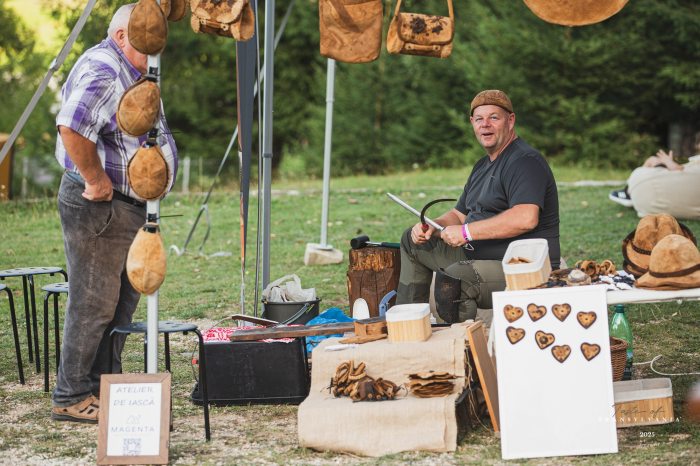
The Transylvanian section of the Skanzen will not only use outdoor spaces. Tents will host agricultural organizations, discussions, and small-scale producers. A cinema will operate above the café, while restaurants will welcome visitors with installations in front of the church. More than twenty Transylvanian, Hungarian, and Romanian catering establishments will offer their specialties.
Visitors can learn about traditional curd-making in a reconstructed shepherd’s settlement, attend chimney cake workshops, and explore a Saxon courtyard filled with craftspeople. Meanwhile, Székely women will prepare stuffed cabbage from morning till evening over three days. Guests will be greeted at the entrance with a bite to eat and a shot of caraway pálinka, and throughout the festival they can sample a wide range of delicacies — from smoked meats to freshly baked bread.
The Skanzen’s “living museum” programs will also continue, with activities in nearly every gateway and endless opportunities to taste Transylvanian specialties.
Transportation is made easy by shuttle buses running from the Szentendre HÉV terminus, included in the ticket price.
As Trucza noted, the festival will also be held in Transylvania this year — first in Kolozsvár (Cluj-Napoca), then in Marosvásárhely (Târgu Mureș) and Gyimes, and finally in Bucharest in mid-October. Those inspired in Szentendre to explore Transylvanian culture further are encouraged to attend these events as well, as the program varies from location to location.
The English translation was produced with large language model and reviewed by a human editor.